- By: @RFF
Commentary by Andrey Bimokanov, General Director of the Logistics Company RFF
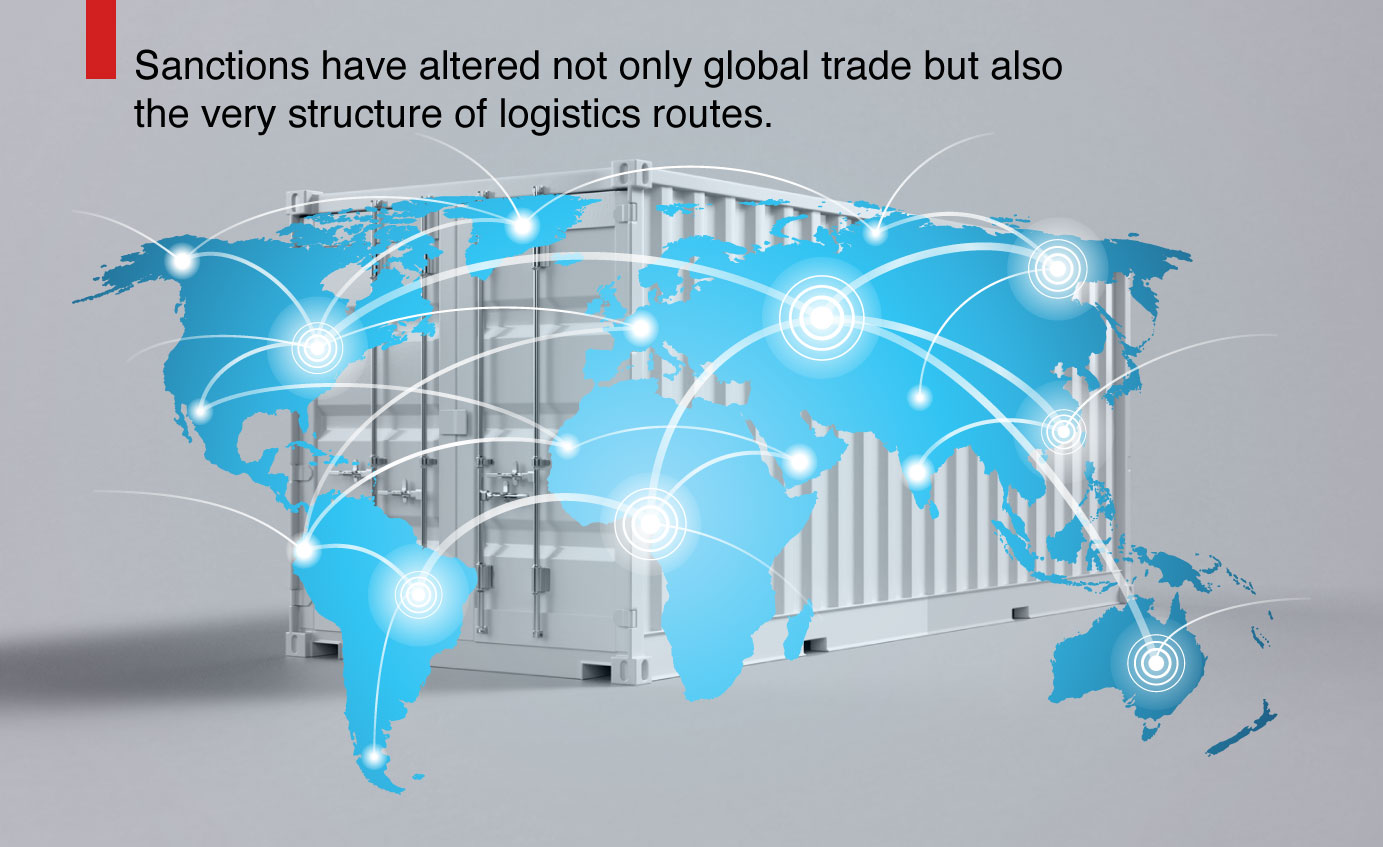
Sanctions have altered not only global trade but also the very structure of logistics routes.
Just three years ago, the delivery of equipment and machinery from Europe to Russia followed well-established channels. Today, even attempting to send a container can become a logistical puzzle.
“International shipping lines simply refuse to accept sanctioned cargo if the consignee is listed as a Russian entity. Even if the goods themselves are not under sanction, the presence of a Russian recipient triggers a system-level block,” notes Andrey Bimokanov, General Director of RFF.
Why has it become more complicated?
The core issue is the inability to deliver goods directly in a single container.
Many importers working with Europe, the US, and Latin America are now forced to repackage or transship cargo in intermediary countries like Turkey, the UAE, or parts of Asia. This is not just an extra step – it introduces an entire spectrum of risks:
compromised packaging and load security,
increased likelihood of damage,
extended delivery timelines (sometimes doubled),
higher costs (up to +25% in logistics expenses).
What is the market offering? And what actually works?
Many players in the market continue to build logistics networks based on outdated models, risking both timing and cargo safety. But alternatives do exist.
RFF has implemented a model based on the use of its own containers and full control over the logistics chain – from the shipper to the final consignee.
“This is not just transportation – it’s end-to-end cargo supervision. We eliminate the element of chance, preserve the integrity of the container, and manage the entire route,” explains Bimokanov.
What this means for the client:
- the container remains sealed throughout the journey,
- no need for repacking or transshipment,
- risks related to timing, packaging, and documentation are minimized,
- clear and unified responsibility throughout the process.
A new perspective on logistics: not a service, but a project
Modern international logistics require a complete rethinking.
Sanctions are not just restrictions – they are challenges that cannot be addressed with standard solutions. Importing is still possible, but it now demands a project-based mindset: precise planning, robust solutions, and a flexible route architecture.
“We don’t ask whether it’s possible – we look for a way. And more often than not, we find it,” concludes Bimokanov.
A question for the market:
Today, cargo delivery is no longer just a matter of transport.
It’s a matter of responsibility and the readiness to build resilient routes in a transformed global reality.
Is the market ready to accept that ‘one container – one route’ no longer works?